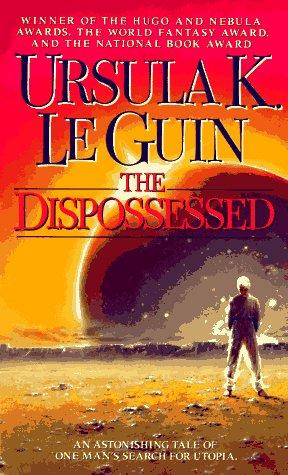
Someone described this to me once as the anti Ayn Rand, and having now read it, that’s about right, except it’s a much better novel than that framing makes it sound. Shevek grows up on Anarres, a moon settled generations back by anarchist revolutionaries who fled the capitalist planet Urras, and the book alternates chapters between his childhood there and his present trip to Urras itself, chasing a physics theory his own supposedly-free society keeps quietly strangling through committee and social pressure instead of law. Neither planet comes out looking like the answer. That’s the whole point and it’s rare enough that I want to underline it.
Structurally this asked more of me than most books do. My copy didn’t clearly label which chapters were set on which planet, and for a stretch early on I genuinely lost track of where and when I was, which I’ve since learned is a common complaint, some editions handle the labeling better than others. Once I found the rhythm it stopped mattering, the two threads talk to each other in a way that rewards the disorientation. There’s a scene on Urras where a woman more or less corners Shevek in her room and he has to physically flee, having no framework at all for the kind of manipulation propertied society trains into courtship, and it’s funnier and sadder than a two page scene has any right to be.
What actually got me, though, wasn’t the political theory, it’s the small stuff. The ansible, the instant communication device Shevek is building, gets one throwaway line where a reader connects it to something like a free and open internet, connecting people across distance without anyone owning the wire, and that’s stuck with me since. Le Guin never once lets Anarres off the hook for the ways its own leaderless society still finds ways to punish nonconformity through gossip and shame instead of prisons. Slow opening, no argument there, but the reward at the other end of that slowness is one of the smartest books I’ve read this year.